
Introduction
The world is shifting toward renewable energy, and one of the best examples of this change is the solar street lamp. As cities, towns, and even rural areas look for cost-effective and eco-friendly lighting options, the solar street lamp has become a symbol of innovation, efficiency, and sustainability. Let’s explore why this technology is transforming modern lighting systems and how it benefits both the environment and communities.
Table of Contents
1. What Is a Solar Street Lamp?
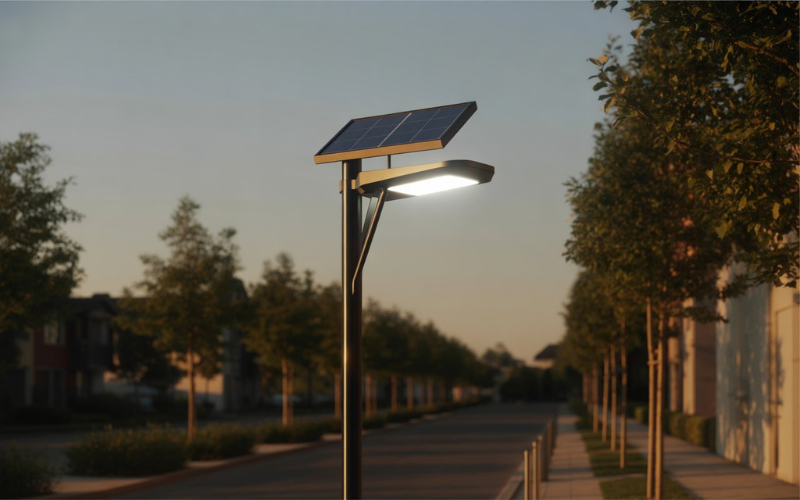
A solar street lamp is an outdoor lighting system that runs entirely on solar energy. It uses a solar panel to capture sunlight during the day and stores the energy in a rechargeable battery. After sunset, this energy powers LED lights to deliver consistent illumination for streets, parks, campuses, parking areas, and locations without access to electricity.
Solar street lamps are increasingly used as a sustainable alternative to traditional grid-powered street lights. They help reduce electricity consumption, lower carbon emissions, and provide reliable lighting in both urban and rural environments.
Key Components of a Solar Street Lamp:
- Solar panel – captures sunlight and converts it into electricity using high-efficiency photovoltaic technology.
- LED lamp – provides long-lasting, bright illumination for public safety and urban infrastructure.
- Rechargeable battery – stores energy for night-time operation; commonly lithium-ion or LiFePO₄ batteries.
- Controller and motion sensor – manages energy usage, prevents overcharging, and adjusts brightness automatically.
- Pole and mounting structure – durable support system designed for outdoor weather conditions.
These components work together to provide automated, low-maintenance solar lighting, which is ideal for areas with inconsistent or no access to electricity.
2. How Does a Solar Street Lamp Work?
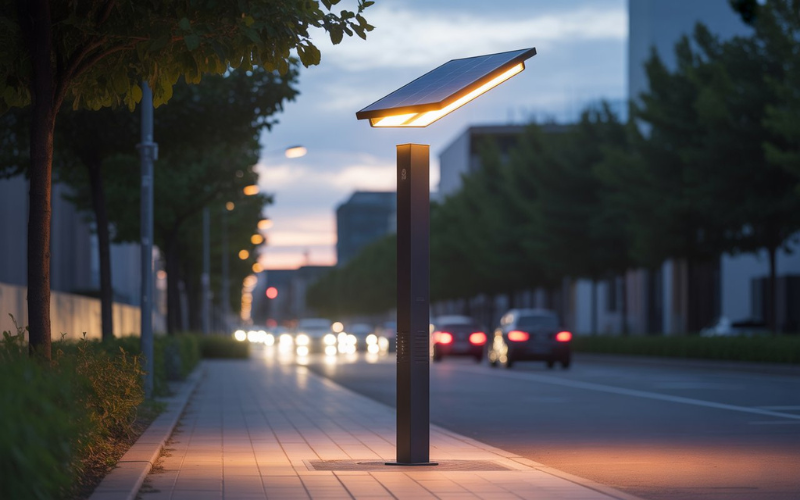
The working principle of a solar street lamp is simple yet highly efficient, relying solely on sunlight. Modern solar LED street lights integrate smart technologies to ensure energy efficiency and reliable performance.
Daytime Charging
During the day, the solar panel captures sunlight and converts it into direct current (DC) electricity using photovoltaic cells. Monocrystalline panels are most efficient, especially under low-light conditions, though polycrystalline panels are a cost-effective alternative.
This electricity is stored in a rechargeable battery, typically lithium-ion or lithium iron phosphate (LiFePO₄), known for long lifespan, fast charging, and deep discharge capabilities. The charge controller regulates voltage and current to prevent overcharging and ensure battery longevity.
Automatic Lighting at Night
As the sun sets, built-in light sensors detect the drop in ambient light. The controller automatically activates the LED lamp, drawing energy from the battery. Many modern solar street lamps include motion detection sensors, which adjust brightness based on nearby movement. This feature enhances security lighting while conserving energy, making it ideal for parking lots, pathways, and urban streets.
Dawn Shut-Off and Recharging
At sunrise, the sensors detect daylight and automatically turn off the LED lamp. The solar panel then resumes charging. This fully automated system requires minimal human intervention and is perfect for remote locations, off-grid areas, and areas with unreliable electricity
3. Advantages of Solar Street Lamps
Adopting solar street lighting provides numerous economic, environmental, and operational benefits.
Energy Saving and Cost Efficiency
Solar street lamps use free sunlight, eliminating electricity costs entirely. Over time, these systems often pay for themselves within 2–4 years due to reduced energy consumption and maintenance costs.
Low Maintenance and Easy Installation
Solar street lamps require minimal maintenance. Installation is faster and cheaper than conventional lighting because there’s no need for underground wiring or grid connections. Components such as LED lamps, batteries, and panels are designed to be durable and long-lasting.
Reliable Performance
Even during power outages, solar street lamps provide consistent illumination, ensuring public safety and continuous operation in remote or rural areas.
Environmentally Friendly
Solar street lamps reduce carbon footprint and dependence on fossil fuels. By using renewable energy, they contribute to a sustainable future and help cities achieve environmental goals.
Enhanced Safety and Security
Solar street lighting improves visibility on roads, walkways, and public areas, reducing accidents and deterring crime. Motion sensors in some models further enhance security lighting, brightening when activity is detected.
4. Types of Solar Street Lamps
a. All-in-One Solar Street Light
An all-in-one solar street lamp integrates the solar panel, LED lamp, battery, and controller into a single compact unit. It’s lightweight, easy to install, and ideal for residential streets, parks, and pedestrian pathways.
b. Integrated Solar Street Lamp
Integrated models combine advanced technology in one body for higher brightness, longer battery life, and better energy efficiency. They are well-suited for urban streets, highways, and commercial areas.
c. Solar Street Lamp with Motion Sensor
Motion-sensor lamps adjust brightness automatically based on nearby movement. These smart solar lamps save energy while enhancing security in parking lots, playgrounds, and public spaces.
d. Hybrid Solar Street Lamps
Some systems combine solar energy with grid electricity as a backup. This ensures continuous lighting in areas with inconsistent sunlight or during extended cloudy periods, making them highly reliable for critical infrastructure.
5. Applications of Solar Street Lamps
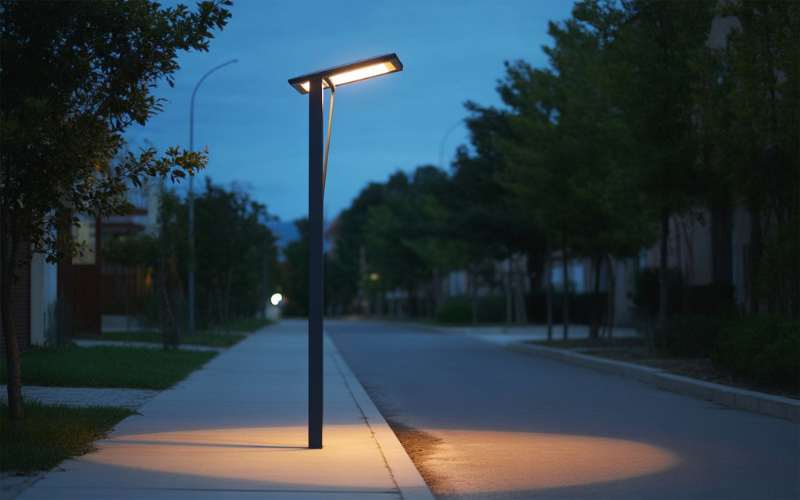
Solar LED street lights are highly versatile and suitable for various locations:
- Highways and roads – ensures safe driving and reduces energy costs for municipalities.
- Parking lots and pedestrian pathways – improves visibility and security.
- Residential streets and gardens – eco-friendly and aesthetically pleasing.
- Parks, playgrounds, and campuses – enhances safety for communities.
- Rural or off-grid areas – provides essential lighting where electricity is unavailable.
With urbanization and sustainable development goals gaining traction, solar-powered street lighting is becoming an integral part of modern city planning.
6. Choosing the Right Solar Street Lamp
Selecting the right solar street lamp is crucial for optimal performance and energy efficiency. Consider these factors:
Brightness Requirement
Brightness is measured in lumens. Residential streets: 1,000–3,000 lumens. Highways and large public areas: 5,000–10,000 lumens. Proper lumen selection ensures visibility without wasting energy.
Battery Capacity
High-capacity batteries ensure lighting during long nights or cloudy weather. Lithium-ion or LiFePO₄ batteries are preferred for durability and fast charging.
Solar Panel Efficiency
Monocrystalline panels are more efficient than polycrystalline, producing more energy per square meter, especially in low-light conditions.
Pole Height and Design
Pole height affects coverage. Taller poles illuminate wider spaces, while shorter poles are ideal for gardens, pedestrian walkways, or residential streets.
Weather Resistance
Choose waterproof, rustproof, and corrosion-resistant materials. High-quality solar street lamps can last over 10–15 years, providing reliable outdoor lighting in all weather conditions.
7. Installation and Maintenance Tips
Proper installation and maintenance maximize efficiency and lifespan:
- Install the solar panel in a sunlight-rich location, away from shade.
- Clean panels periodically to remove dust and debris.
- Inspect wiring and battery connections to prevent faults.
- Replace batteries every 3–5 years for consistent performance.
- Avoid shadows from trees, buildings, or other structures.
Following these steps ensures long-term, energy-efficient solar street lighting with minimal operational costs.
8. Cost and Return on Investment
While the initial investment for solar street lamps may be higher than traditional street lighting, long-term savings are substantial:
- Zero energy costs: sunlight is free.
- Minimal maintenance costs: fewer repairs and labor required.
- Government incentives: subsidies, tax credits, or grants may be available.
- Durable components: LEDs and solar panels last 50,000+ hours, reducing replacement costs.
Most solar street lighting systems pay for themselves within 2–4 years, making them a smart investment for municipalities, residential complexes, and commercial spaces.
9. Comparing Solar Street Lamps to Traditional Street Lighting
| Feature | Solar Street Lamp | Traditional Street Lamp |
|---|---|---|
| Energy Source | Solar energy (renewable) | Electricity (grid-powered) |
| Installation Cost | Moderate upfront, low ongoing | Moderate to high upfront + high ongoing |
| Maintenance | Low | Moderate to high |
| Operating Cost | Near zero | High electricity bills |
| Environmental Impact | Low (eco-friendly) | High carbon footprint |
| Reliability in Remote Areas | High (off-grid operation) | Low (requires electricity) |
| Lifespan | 10–15 years | 8–12 years |
Solar street lamps outperform traditional lighting in energy efficiency, environmental impact, and reliability.
10. The Future of Solar Street Lighting

The future of solar LED street lights is promising. Innovations include:
- AI-powered lighting controls – automatically adjust brightness based on traffic and activity.
- Remote monitoring systems – allow maintenance teams to track performance in real-time.
- Faster-charging solar panels – reduce downtime and improve energy storage.
- Hybrid solutions – combine solar and grid electricity for high-reliability applications.
Globally, solar street lamps are being adopted to enhance public safety, reduce energy costs, and support smart city initiatives. In developing countries, they improve community life by providing safe, well-lit streets and reducing crime rates.
Conclusion
Solar street lamps represent a significant step toward sustainable, renewable outdoor lighting. By harnessing sunlight, they offer cost-effective, reliable, and eco-friendly illumination for streets, parks, campuses, and off-grid locations.
Modern systems combine high-efficiency solar panels, long-lasting batteries, LED technology, and smart sensors, ensuring fully automated operation with minimal maintenance. Solar LED street lights are a long-term solution for municipalities, businesses, and homeowners who want to reduce energy costs and carbon footprint.
FAQs
Q1. How long does a solar street lamp last?
A. High-quality solar lamps last 10–15 years. LEDs can operate for 50,000+ hours; batteries typically last 3–5 years.
Q2. Do solar street lamps work on cloudy days?
A. Yes. Batteries store energy to operate 2–3 nights even under limited sunlight.
Q3. What battery type is best?
A. Lithium-ion or LiFePO₄ batteries are optimal for long life, fast charging, and deep discharge cycles.
Q4. How bright are solar street lamps?
A. Brightness ranges from 1,000 to 10,000 lumens, suitable for residential streets to highways.
Q5. Can solar street lamps operate without direct sunlight?
A. They can charge under indirect sunlight, though efficiency may decrease slightly.