
Introduction
Lava lamps have captivated audiences for decades with their mesmerizing, flowing globs of color suspended in liquid. But if you’ve ever wondered what lava lamp made of, the answer is far more fascinating than you might expect. Understanding the composition of these iconic decorative pieces reveals the clever chemistry and engineering that make them work. From the outer aluminum base to the colorful wax inside, every component serves a specific purpose in creating the hypnotic lava effect that has made these lamps beloved across generations.
Table of Contents
1. Lava Lamp Wax: The Heart of the Movement
The star of a lava lamp is definitely the wax. It may look simple, but it’s not the same wax you’d find in a candle. Instead, it’s a carefully designed blend made to respond perfectly to heat. The main ingredient is paraffin wax, a petroleum-based material also used in candles and cosmetics. Paraffin is ideal because it melts easily, changes density as it warms up, and doesn’t mix with water—so it stays separate from the liquid around it.
That said, paraffin wax on its own wouldn’t create the classic lava lamp motion. To make the magic happen, manufacturers add small amounts of other chemicals to adjust the wax’s density. In the past, substances like carbon tetrachloride were used, while modern lamps often rely on perchloroethylene (PERC) or safer alternatives. These heavier additives make sure the wax sinks when the lamp is cool and floats upward once it’s heated. Each company fine-tunes its own recipe, sometimes adding mineral oils or liquid paraffin, which is why the exact formula inside a lava lamp is usually a well-kept secret.
2. The Lava Lamp Liquid: Water and Secret Additives
To really understand how a lava lamp works, you have to look at the liquid surrounding the wax. This liquid makes up most of the lamp’s interior and is usually about 70 percent water. It’s not regular tap water, though. Manufacturers use distilled water that’s been carefully treated with additives to keep bacteria, mold, and algae from growing inside the lamp over time.
The remaining 30 percent of the liquid is where the real magic happens. This part is made from glycerol or glycol compounds, which play a big role in how the wax moves. Glycerol thickens the liquid, fine-tunes its density, and controls the speed at which the wax blobs rise and fall. By perfectly balancing the density of the liquid with the wax, the lava lamp creates its signature motion—wax sinking when it cools and floating upward as it warms—resulting in the smooth, calming flow we all recognize.
3. Lava Lamp Base Materials: The Foundation
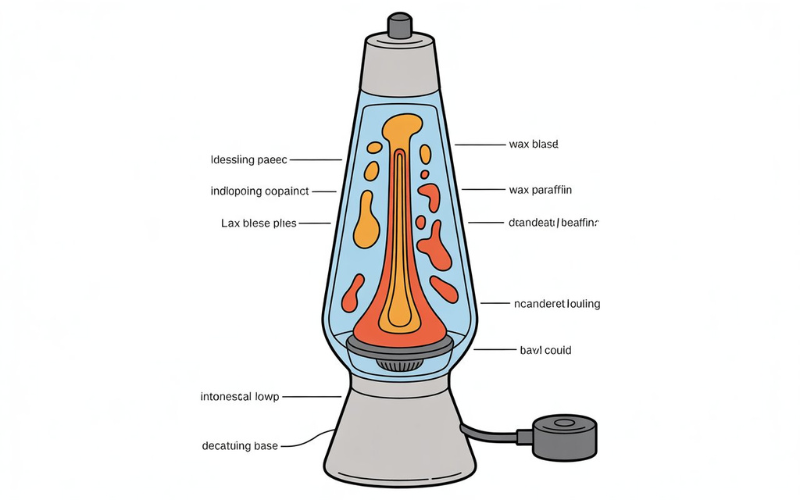
What you see on the outside of a lava lamp matters just as much as what’s happening inside. The lamp’s base is usually made from aluminum, which forms the sturdy foundation that holds everything together. Manufacturers choose aluminum because it’s lightweight, strong, easy to shape, and stable enough to support the glass bottle above it. Many modern lava lamps use hand-spun aluminum bases, finished in shiny silver, warm gold, or other metallic colors that give the lamp its classic, retro look.
Inside the base and around the top cap, zinc alloys are often used for extra strength and durability. Zinc blends well with aluminum, helping the metal parts resist corrosion and keep their polished appearance over time. Some lamps also include small amounts of copper or nickel within the internal base, especially around the electrical components. These metals help improve durability and performance while safely housing the wiring that powers the lamp.
4. Lava Lamp Glass Bottle: Transparent Container
The glass bottle of a lava lamp plays a huge role in both safety and style. This container is usually made from borosilicate glass or soda-lime glass, materials created by melting natural ingredients like silica sand, limestone, and soda ash at extremely high temperatures. The result is a strong, heat-resistant glass that can handle the constant warming and cooling that happens while the lamp is running.
The glass has to strike the perfect balance—it needs to be thick and durable to handle pressure and temperature changes, but also crystal clear so the glowing wax blobs are easy to see. To keep the lamp looking good over time, the glass formula is carefully controlled to prevent cloudiness, staining, or discoloration. It’s also designed to resist chemical reactions, so the wax and liquid inside won’t damage the container. Lava lamp bottles come in a wide range of sizes, from small desktop versions to large statement pieces, but they all share the same goal: clear, durable glass that keeps the lava lamp flowing beautifully for years.
5. Lava Lamp Bulb Type and Heating Element
The heating system is what brings a lava lamp to life, which makes the light bulb far more important than it might seem. Most lava lamps rely on incandescent or halogen bulbs because these bulbs produce steady, reliable heat. Smaller lamps usually use low-wattage incandescent bulbs, while larger models need stronger reflector-style bulbs to generate enough warmth for the wax to start moving.
Incandescent bulbs are especially popular in lava lamps because they give off a lot of heat—much more than light. That heat warms the wax just enough for it to expand, become lighter, and float upward through the surrounding liquid. Some higher-end lava lamps use halogen bulbs, which run a bit hotter and provide brighter illumination, giving the lamp a more vibrant glow.
Inside the bottle, you’ll often find a small metal coil resting near the bottom. This coil helps spread heat evenly across the wax, reduces surface tension, and encourages smoother, more consistent movement. Made from durable materials like stainless steel or nickel-plated wire, it’s built to handle constant heating and cooling without wearing out.
6. Lava Lamp Chemical Ingredients: The Secret Formula
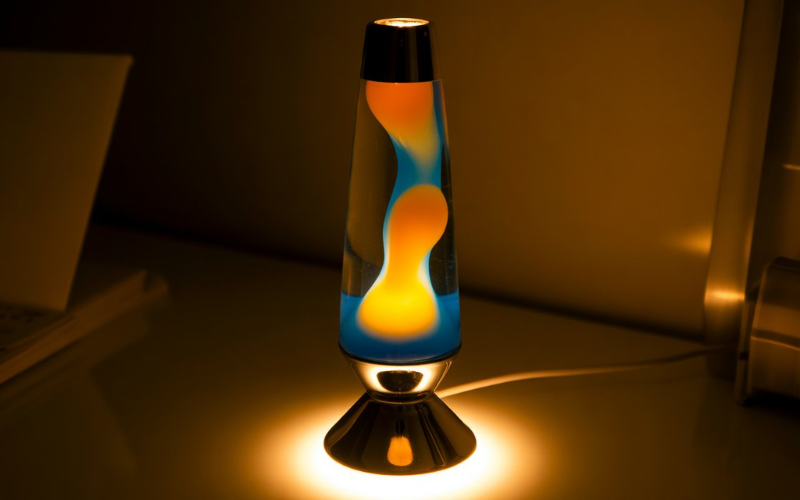
The chemical ingredients inside a lava lamp are where things get a little mysterious. Beyond the main wax and liquid, manufacturers use a carefully balanced mix of special additives that are rarely shared with the public. These extra ingredients may be small in quantity, but they play a huge role in keeping the lava lamp flowing smoothly.
One important group of additives is surfactants, which help the wax blobs glide easily through the liquid instead of sticking to the glass. Glycol-based compounds help fine-tune the thickness and density of the liquid, making sure the wax moves properly in both warm and cool environments. To keep the lamp looking clear and clean over time, manufacturers also add preservatives and antifungal agents that stop bacteria or algae from growing in the water-based solution.
Because the lava lamp formula is so finely tuned, even tiny changes can affect how well it works. That’s why manufacturers test their lamps under different temperatures, light bulb strengths, and storage conditions to make sure the motion stays consistent. Interestingly, older lava lamps often used slightly different chemical blends than modern ones, which is why vintage lamps sometimes behave differently—or have a movement style all their own.
7. How the Materials Work Together
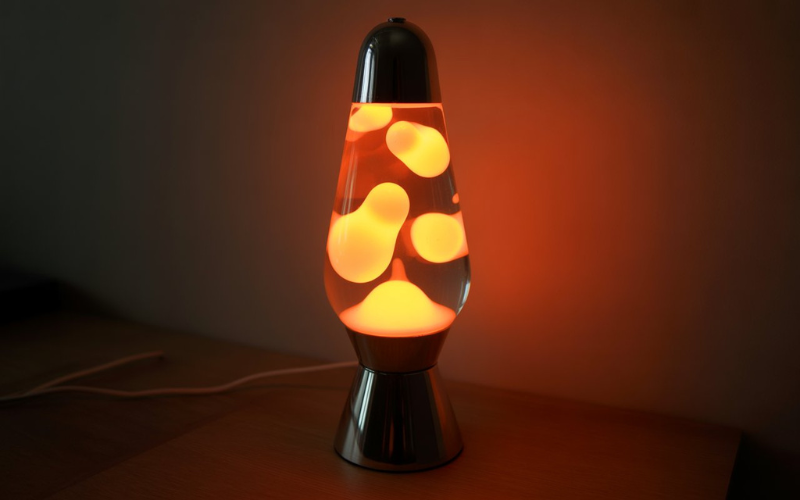
Understanding how a lava lamp works isn’t just about knowing what it’s made of—it’s about seeing how all those parts work together. The real brilliance of a lava lamp comes from a carefully planned difference in density between the wax and the surrounding liquid. When the lamp is cool, the wax is slightly heavier than the liquid, so it settles calmly at the bottom.
Once the lamp is switched on, the bulb below begins to warm the wax. As the wax heats up, it expands and becomes lighter. When it reaches just the right temperature—warm enough to lose density—it slowly lifts off the bottom and floats upward through the liquid. Near the top of the lamp, where it’s cooler, the wax begins to shrink and grow heavier again, causing it to sink back down. This rise-and-fall cycle repeats over and over, creating the smooth, mesmerizing motion lava lamps are famous for.
The colors you see come from special dyes mixed into both the wax and the liquid, made brighter by the light shining up from the base. The thickness of the liquid also plays a role: a thicker liquid makes the wax move slowly and calmly, while a thinner one allows faster, more dramatic motion. Together, these elements create either a soothing, relaxing glow or an energetic, eye-catching display—depending on the lamp’s design.
8. Lava Lamp Materials: Environmental and Safety Considerations
It’s important to know that lava lamps are safe to enjoy as decorative lighting, especially the ones made today. Earlier versions, however, sometimes used chemicals that are no longer considered ideal for health or the environment. One example is carbon tetrachloride, which was once added to help control wax density but has since been phased out. Modern lava lamps now rely on safer alternatives, allowing manufacturers to keep the classic lava flow while meeting today’s safety standards.
When it comes to disposal, lava lamps aren’t the easiest items to recycle. Because they’re made from a mix of wax, chemicals, glass, and metal parts, taking them apart is tricky and not usually recommended. That said, some of the materials—such as aluminum bases, copper wiring, and glass bottles—could potentially be recycled if separated properly. Most lamps, however, aren’t designed with easy disassembly in mind, so recycling options can be limited.
FAQs
Q1. What lava lamp made of for the colorful blobs?
A. What lava lamp made of includes paraffin wax, mineral oil, and perchloroethylene that create the rising, falling blobs through density changes.
Q2. Is what lava lamp made of safe around kids?
A. What lava lamp made of uses non-toxic water, glycerol, dyes, and wax, safe for homes when unopened and not overheated.
Q3. Why does what lava lamp made of flow slowly?
A. What lava lamp made of relies on heat from the bulb making wax expand, rise, cool, and sink in a continuous cycle.
Q4. Can what lava lamp made of get cloudy and how to fix?
A. What lava lamp made of clouds from density imbalance; run 6-hour cycles or filter the liquid to clear it up.
Q5. What lava lamp made of in vintage vs modern versions?
A. What lava lamp made of evolved from carbon tetrachloride in vintage to safer perchloroethylene in modern lamps.
Conclusion
The question of what lava lamp made of reveals a sophisticated interplay of materials, chemistry, and engineering. From the petroleum-derived paraffin wax that creates those iconic floating blobs, to the carefully calibrated mixture of water and glycerol that surrounds it, every component of a lava lamp serves a specific purpose. The aluminum base provides structural support, the glass bottle creates a transparent chamber, and the incandescent bulb supplies the precise heat needed to drive the continuous cycle of rising and falling wax.