
Introduction
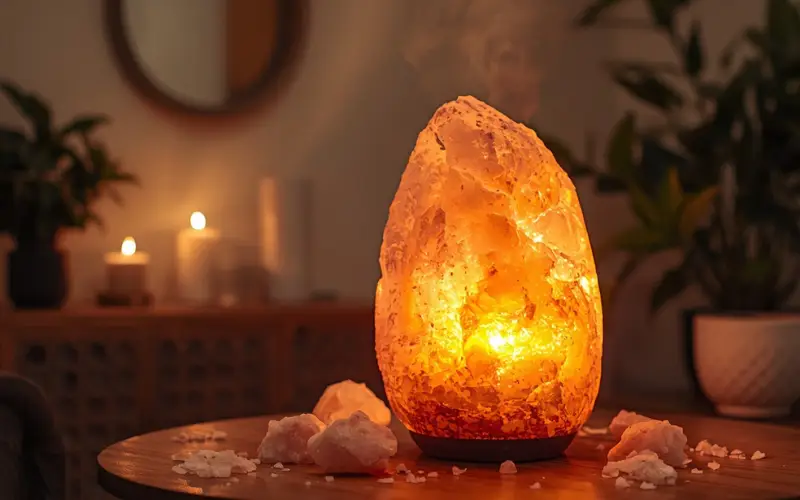
There’s something quietly magical about walking into a room lit by a Himalayan salt lamp. That soft, amber glow has a way of softening the edges of a long day — and it’s part of why these pink crystal lamps have moved from niche wellness stores into bedrooms, offices, and meditation corners worldwide. But behind the glow is a bigger conversation: what is the real advantage of Himalayan salt lamp ownership, and how much of it actually holds up under honest scrutiny?
Some people swear they sleep better. Others use them to set the mood for yoga or quiet reading. And then there are the bolder claims — air purification, allergy relief, mood-boosting ions — that float around social media and wellness blogs without much backing. So which advantage of Himalayan salt lamp is worth believing, and which is just clever marketing?
This guide cuts through the noise. We’ll walk through nine genuine benefits, look at what science actually supports, compare salt lamps to dedicated air purifiers, and share practical tips on choosing, placing, and caring for yours. No hype — just a clear picture of what you’re really getting when you bring one of these glowing crystals home.
Table of Contents
1. What Is a Himalayan Salt Lamp?
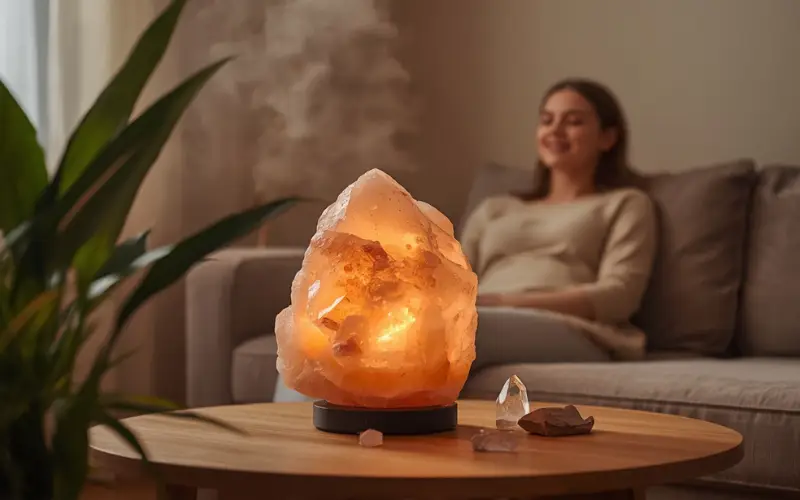
A Himalayan salt lamp is simply a large chunk of pink rock salt, hollowed out, with a light bulb placed inside. When switched on, it radiates a soft, warm reddish-pink glow that many people find deeply calming.
Authentic salt lamps are carved from mineral-rich pink halite rock mined at the Khewra Salt Mine in the Punjab region of Pakistan — one of the world’s largest and oldest salt mines. The salt there is believed to be around 250 million years old, which is part of what makes it so fascinating to people who love natural wellness products.
They come in different sizes and shapes — from small decorative pieces to large, bowl-style lamps filled with loose salt crystals. The larger the lamp, the stronger its (alleged) effect on the surrounding air.
Quick Facts
- Origin: Khewra Salt Mine, Pakistan
- Color: Naturally pink, orange, or off-white due to iron and mineral content
- Typical size: 2–10 kg for home use
- Heat source: A low-watt incandescent bulb inside the hollowed crystal
- Price range: $15–$80 depending on size and quality
2. Why Do People Buy Them? The Popular Claims
Walk into any wellness store and you’ll see salt lamps marketed with impressive-sounding health claims — air purification, allergy relief, mood improvement, better sleep. These claims have spread widely across social media and wellness blogs. But before you take them at face value, it’s worth separating what’s supported by research from what’s more folklore than fact.
Here’s an honest look at every advantage of Himalayan salt lamp that people commonly talk about.
3. 9 Advantages of Himalayan Salt Lamp (Honest & Detailed)
1. Soothing Warm Ambiance
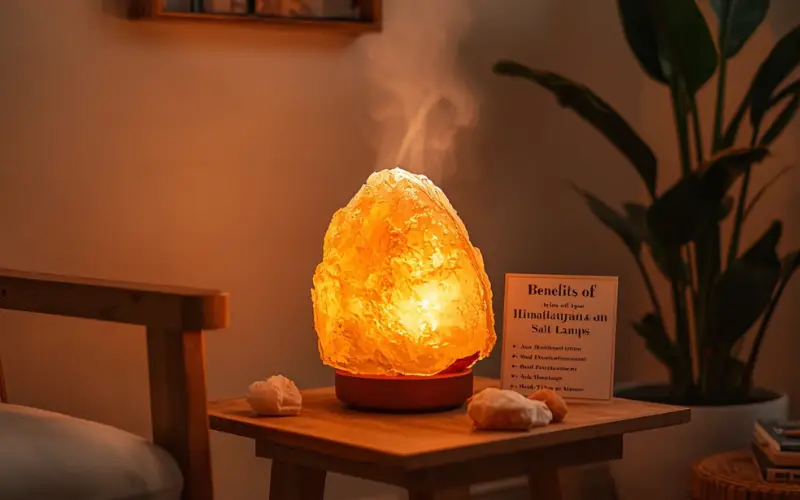
This is the most undisputed advantage of Himalayan salt lamp. The soft, amber-orange glow creates an instantly warm and cozy atmosphere — far less harsh than standard room lighting. Many people use them as a gentle nightlight in bedrooms and living spaces.
2. May Support Better Sleep Hygiene
Bright artificial light at night suppresses melatonin — the hormone your body needs to fall asleep. Switching to the dim, warm light of a salt lamp in the evening can help signal to your brain that it’s time to wind down. This isn’t unique to salt lamps, but their natural warm tone makes them ideal for a pre-sleep routine.
3. Mood-Enhancing Effect
Animal studies suggest that negative ions — which salt lamps are claimed to produce — may increase serotonin levels. While the human evidence is still inconclusive, many users report feeling calmer and more relaxed in a room with a salt lamp on. The placebo or ambiance effect is real, even if the ion science is not fully proven.
4. Aesthetic Home Décor
Let’s be honest — salt lamps are stunning. Their organic shape and warm amber glow add a natural, earthy elegance to any room. They work beautifully as bedside lamps, desk accessories, or meditation corner pieces. For interior design lovers, this alone is a compelling advantage of Himalayan salt lamp.
5. Supports a Relaxation Routine
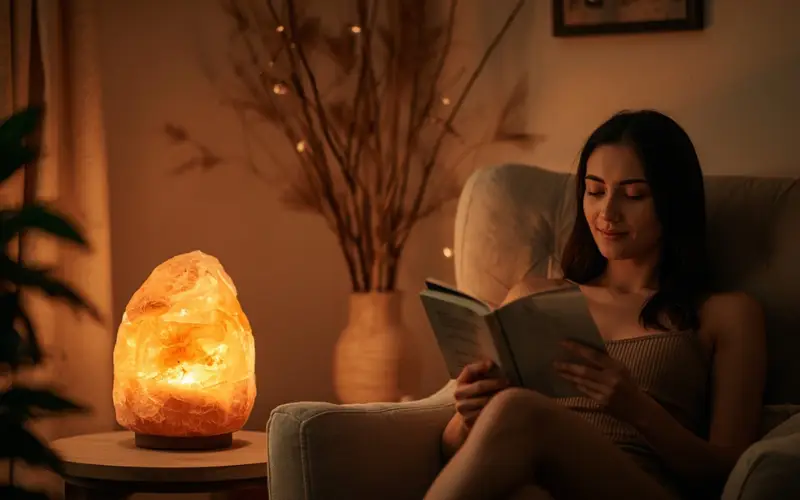
Many people incorporate salt lamps into their yoga, meditation, or reading rituals. The act of dimming overhead lights and turning on a salt lamp can work as a psychological trigger — signaling your mind to slow down. Ritual and environment matter enormously for relaxation, and salt lamps help set the tone.
6. Claimed Negative Ion Production
The theory: when the lamp heats up, it attracts water molecules from the air, then evaporates them — releasing negative ions in the process. Negative ions are found naturally near waterfalls and oceans and are associated with feelings of freshness. However, scientists note that a small household bulb likely doesn’t generate enough heat to produce ions in meaningful quantities.
7. Mild Air Hygroscopy
Salt is naturally hygroscopic — it attracts and absorbs water from the air. In theory, this could also trap some airborne dust or allergen particles on the lamp’s surface. In practice, the effect is very minor compared to a proper HEPA air purifier. Think of it less as a medical air filter and more as a gentle humidity modifier.
8. Possible Reduced Screen Glare Discomfort
Using a salt lamp alongside your computer or TV provides warm ambient fill-lighting that reduces the jarring contrast between a bright screen and a dark room. This can make extended screen time feel gentler on the eyes — a small but genuinely practical advantage of Himalayan salt lamp for home office setups.
4. What Does Science Actually Say?
Let’s be transparent. The scientific backing for the health claims around pink salt lamp benefits is limited. Here’s the current state of research:
| Claim | Evidence Level | Verdict |
|---|---|---|
| Produces negative ions | Very limited | Unlikely in significant quantities |
| Improves air quality | Anecdotal only | No proven effect |
| Relieves allergy symptoms | No direct studies | Not substantiated |
| Boosts mood/serotonin | Animal studies only | Possible via ambiance; not via ions |
| Improves sleep | Indirect (via dim light) | Plausible as part of sleep routine |
| Reduces screen eye strain | General light science | Plausible — warm fill light helps |
| Creates calming atmosphere | Widely reported | Consistent user experience |
The bottom line from researchers at both Healthline and WebMD is consistent: there is currently no strong clinical evidence that the advantage of Himalayan salt lamp extends to medical-grade air purification, allergy treatment, or ion therapy. That said, the wellness and ambiance benefits are very real — and for many people, those are reason enough.
5. Himalayan Salt Lamp vs. Air Purifier: Which Should You Choose?
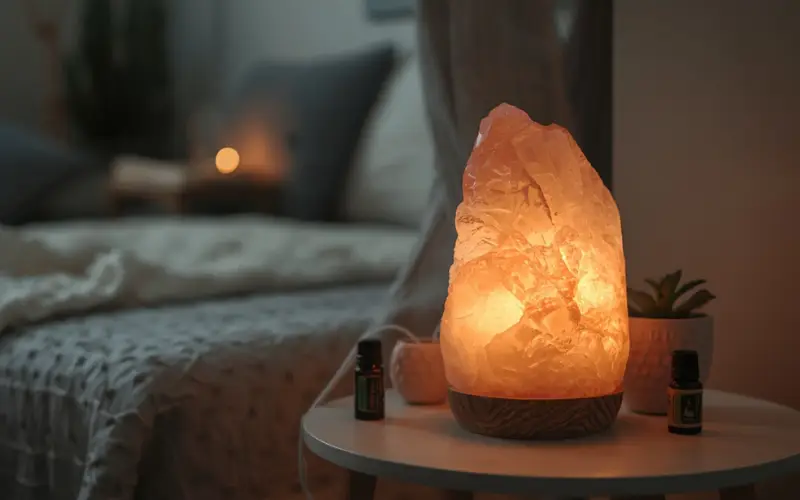
If your primary goal is cleaner indoor air — especially if you have asthma, severe allergies, or respiratory conditions — a proper HEPA air purifier is far more effective than a salt lamp. Salt lamps have a negligible, unproven filtering capacity compared to mechanical filtration systems.
However, if your goal is creating a calm, beautiful environment that supports mindfulness and better evening habits, a Himalayan rock salt lamp is a lovely, affordable choice. The two products serve different purposes and aren’t direct competitors.
6. How to Get the Most Out of Your Salt Lamp
Keep It On for Long Periods
Salt lamps work best when left on for at least 16 hours a day. The warmth from the bulb helps prevent moisture buildup and keeps the lamp dry. Turning it off frequently causes condensation that can damage the lamp surface over time.
Choose the Right Size
Size matters more than people realize when picking a salt lamp. A tiny crystal lost in the corner of a spacious room will barely register, both visually and in terms of that warm, glowing atmosphere salt lamps are loved for. A practical guideline: aim for roughly 1 kg of salt crystal per 10 square feet of floor space. For most bedrooms, that lands you somewhere in the 3–5 kg range, which is the sweet spot for creating a cozy, soft-lit retreat without overwhelming the space.
Place It Thoughtfully
Bedside tables, meditation corners, home offices, and reading nooks are ideal spots. Avoid placing your salt lamp in humid areas like bathrooms, as the rock salt will absorb moisture and deteriorate faster.
Buy Authentic
Fake salt lamps are common online. Genuine Himalayan pink salt lamps from the Khewra Mine are slightly fragile, produce a dim (not bright) glow, and may show minor moisture sweating when off. If your lamp is very bright and feels like hard plastic when dropped — it’s likely a fake.
Safety Note: In 2017, thousands of salt lamps were recalled due to faulty dimmer switches that posed fire hazards. Always buy from a reputable brand. Keep salt lamps away from pets — cats and dogs are attracted to licking salt, and too much salt ingestion can be toxic to animals.
7. Who Should Consider a Himalayan Salt Lamp?
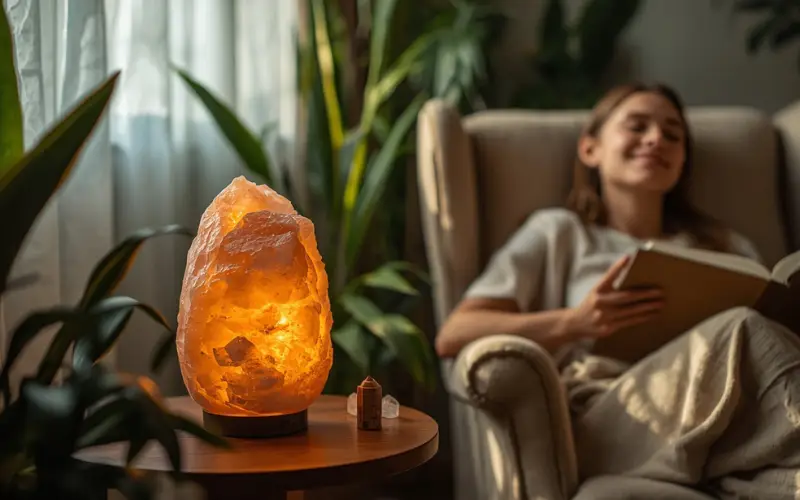
A salt lamp is a good fit if you:
You’ll Love a Salt Lamp If You…
- Want to create a relaxing, spa-like atmosphere at home
- Struggle to wind down at night and want softer evening lighting
- Enjoy natural, earthy home décor elements
- Meditate, do yoga, or practice mindfulness regularly
- Work long hours at a desk and want warm ambient fill-lighting
- Are curious about wellness products and enjoy the ritual of using them
It’s probably not the right purchase if you’re expecting it to replace a medical-grade air purifier, treat a clinical health condition, or produce measurable changes in air ion levels.
FAQs
Q1. Can you keep a Himalayan salt lamp on all night?u003cbru003e
A. In most cases, yes — they’re designed for extended use. Stick with a low-wattage bulb (15W incandescent is the standard), and make sure the lamp sits on a sturdy, heat-resistant surface like wood, ceramic, or stone. Give it some breathing room from curtains, bedding, paper, or anything else that could catch heat. It’s also worth glancing at the cord and dimmer switch every so often — frayed wires or a loose dimmer are the main things to watch for. Treated with the same common sense you’d give any plug-in lamp, leaving it glowing overnight is perfectly fine.
Q2. Is the advantage of Himalayan salt lamp real or just a trend?
A. Some advantages — like ambiance, mood support through warm lighting, and relaxation — are genuinely real. Others, like medical-grade air purification, are not well supported by scientific evidence. Understanding this distinction helps you get the most value from your purchase without unrealistic expectations.
Q3. What size salt lamp do I need for my bedroom?
A. A 3–5 kg lamp works well for a standard bedroom. For a larger living room or open-plan space, consider a larger lamp (6–10 kg) or multiple smaller ones placed in different areas of the room.
Q4. Can a salt lamp really clean the air in my room?
A. Not in any clinically meaningful way. While salt is hygroscopic and may attract a small number of airborne particles, it cannot compare to a HEPA air purifier. For people with serious respiratory issues, a dedicated air purifier is a far more reliable option.
Q5. What’s the lifespan of a Himalayan salt lamp?
A. The good news: the crystal itself is essentially a lifetime piece. Salt mined from the Khewra region has been sitting underground for hundreds of millions of years, so a few decades on your nightstand won’t faze it. With basic care — keeping it dry and wiping off any moisture buildup — your lamp can easily outlast most of the furniture around it. The only part that wears out is the bulb, which usually needs swapping every 4 to 6 months depending on how often you use it. So really, you’re buying the crystal once and treating the occasional bulb change as the only ongoing cost.
Conclusion
So, where does that leave us? The honest advantage of Himalayan salt lamp ownership isn’t found in dramatic health claims or miracle cures — it’s found in the small, daily moments these lamps quietly enhance. The wind-down after a long workday. The softer light during evening reading. The gentle ritual of switching it on as a signal to your nervous system that it’s time to slow down.
Are salt lamps medical devices? No. Will they replace your air purifier or solve allergies? Also no. But will a well-chosen Himalayan rock salt lamp make your space feel warmer, calmer, and more intentional? Absolutely — and for thousands of years, humans have understood that environment shapes wellbeing in ways that don’t always need a laboratory to prove.
If you’re drawn to natural décor, mindful living, or simply a more peaceful evening atmosphere, the advantage of Himalayan salt lamp use is real and worth experiencing for yourself. Buy authentic, pick the right size for your space, keep it on regularly, and let it do what it does best — make your home feel a little more like a sanctuary.