
Introduction
You’ve picked the bed frame, styled the pillows, and finally found a nightstand you love. But the moment you place a lamp on it, something feels off. Either the lamp looks like it belongs in a hotel lobby, or it’s so small it barely lights the page of your book.
Figuring out what size table lamp for nightstand setups actually need is one of those details that separates a bedroom that looks put-together from one that just looks like furniture arranged in a room. The good news? Once you understand a few simple sizing principles, you’ll never second-guess a lamp purchase again.
This guide covers height, shade width, wattage, style, and every real-world factor that goes into choosing a nightstand lamp that genuinely works — both for lighting and for the way your room looks and feels.
Table of Contents
1. Start Here: The Numbers That Actually Matter
Before getting into style or shade shape, let’s talk dimensions. When people ask what size table lamp for nightstand use is ideal, they’re usually asking about height — but width matters just as much.
Here are the two core measurements to keep in mind:
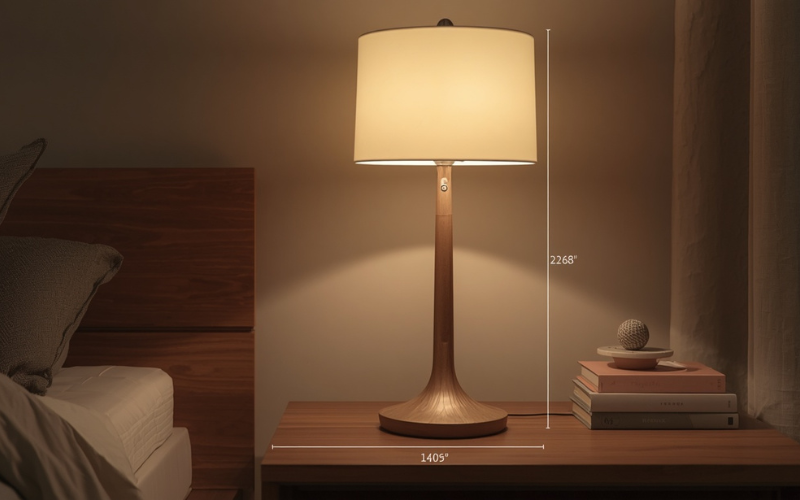
Total Lamp Height: 24 to 27 inches This is the most cited recommendation among interior designers, and for good reason. A lamp in this range positions the bottom edge of the shade at roughly seated eye level — meaning light falls where you need it without shining directly into your eyes when you’re propped up reading.
Shade Diameter: 12 to 16 inches For most standard nightstands (18 to 24 inches wide), this range keeps the lamp visually proportionate without dominating the surface or leaving no room for your phone, glass of water, or book.
These numbers are guidelines, not rules carved in stone. The right size for your space depends on several factors, which we’ll break down one by one.
Factor 1 — Your Nightstand Height
The height of your nightstand is the single most important variable when determining what size table lamp for nightstand setups work best.
The goal is always the same: the bottom of the lamp shade should fall somewhere between your chin and shoulder when you’re sitting up in bed. That’s the zone where light is functional without creating glare.
- Short nightstands (22–24 inches): You need a taller lamp — aim for 26 to 30 inches total — to raise the shade to the right level.
- Mid-height nightstands (25–28 inches): The standard 24–27 inch range works well here.
- Tall nightstands (29 inches and above): Go shorter — a lamp between 20 and 24 inches keeps the shade from rising too high above eye level.
A quick trick: stand a ruler or tape measure next to your nightstand while you sit in bed. Mark the height at chin level. That’s your target for where the shade bottom should land.
Factor 2 — Your Mattress and Bed Frame Height
Beds today come in wildly different heights. A low-profile platform bed with a slim mattress might sit 18 inches off the floor. A traditional bed with a box spring and a thick pillow-top mattress can easily reach 28 to 32 inches. The difference is enormous — and it completely changes what “eye level” means in your bedroom.
If your bed is particularly tall, a standard-height nightstand lamp may end up sitting below the mattress line, which makes it almost useless for reading. You’d either need a taller lamp or a taller nightstand to compensate.
Conversely, if you have a low platform bed, a 27-inch lamp might feel overwhelming. A sleeker lamp in the 20–23 inch range will look more balanced and proportionate.
The relationship between your bed height and nightstand height is the foundation of every lamp sizing decision. Get that combination right first, then choose your lamp to match.
Factor 3 — The Nightstand Surface Itself
Lamp size isn’t only about height. The surface area of your nightstand determines how wide a lamp base and shade you can realistically use.
A lamp with a wide, heavy base on a narrow floating shelf will look top-heavy and unstable — visually and literally. Meanwhile, a slim candlestick lamp on a large, sprawling nightstand can look timid and underwhelming.
As a general rule:
- Leave at least 2 to 3 inches between the shade edge and the nightstand edge on each side.
- The lamp base footprint should take up no more than one-third of the nightstand surface to leave room for other items.
- If your nightstand is under 16 inches wide, strongly consider a wall sconce or a lamp with an extremely slim base instead.
Also think about clutter. Most people keep a lamp, their phone, a glass of water, and maybe a book or remote on the nightstand. If the lamp base is too wide, it crowds everything else off the surface.
Factor 4 — Ceiling Height and Room Scale
A lamp that looks perfect in a room with 8-foot ceilings can look completely different in a room with 10-foot ceilings — and vice versa. Ceiling height affects the overall sense of scale in a room, and your lamp needs to feel proportionate to the whole space, not just the nightstand.
In rooms with high ceilings, you generally have more visual headroom to use a taller, more dramatic lamp without it feeling oppressive. In rooms with lower ceilings, stick with the lower end of the height range and opt for shades that diffuse light sideways rather than upward.
Room width matters too. A large master bedroom can carry a pair of bold, 30-inch lamps on matching nightstands. A small guest bedroom calls for something more restrained — both in height and shade width — so the lamps don’t eat up the visual space.
2. The Shade: Width, Shape, and What It Does to Light
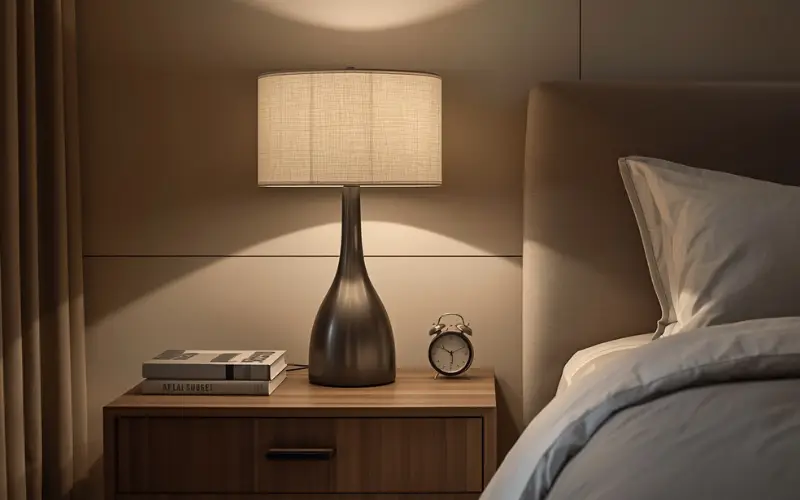
The shade is not just decorative. It controls where light goes, how much it spreads, and what kind of atmosphere the lamp creates. When working out what size table lamp for nightstand spaces need, don’t overlook the shade.
Width
As mentioned, aim for a shade diameter no wider than your nightstand. The shade width should also roughly match the height of the base — this is a classic proportion rule that helps the lamp look balanced.
- Too wide: The shade overhangs the nightstand edges and makes the whole setup feel precarious and bulky.
- Too narrow: The shade looks stingy and the lamp feels pencil-thin in a distracting way.
Shape
- Empire shades flare out at the bottom and direct light downward — excellent for task lighting and reading.
- Drum shades are the same width top and bottom, spreading light more evenly in all directions — better for ambient light.
- Bell shades sit between the two: they flare gently and cast a soft, warm glow that works well in relaxing bedroom environments.
For most nightstand applications, empire shades are the most practical because they concentrate light where you actually use it — on your book, phone, or notepad.
Material and Opacity
A thick, opaque shade creates a dramatic pool of light downward but keeps the shade itself dark. A semi-translucent linen or cotton shade glows softly and adds warmth to the whole room. For a bedroom, softer materials tend to create a more relaxing atmosphere, especially for nighttime use.
3. Wattage and Bulb Type: Often Ignored, Always Important
Sizing isn’t purely physical. A lamp that’s the right height and width but uses the wrong bulb will still fail at its job.
For a nightstand lamp used primarily for reading, you want somewhere between 450 and 800 lumens — roughly equivalent to a 40 to 60-watt incandescent bulb in old money, or a 6 to 10-watt LED equivalent.
Bright white (5000K) bulbs feel clinical and harsh in a bedroom. Warm white (2700K to 3000K) bulbs produce a soft, golden light that’s easier on the eyes and far more conducive to winding down at the end of the day.
If your lamp supports a 3-way bulb or has a built-in dimmer, even better. Being able to dial down the light in the evening while keeping full brightness for reading is one of the most underrated features in a bedside lamp.
4. Should Both Bedside Lamps Match? Here’s the Honest Answer
If you’re styling a bedroom with two nightstands, matching lamp sizing becomes a question of symmetry. They don’t have to be identical — in fact, mixing styles is a common and effective design choice — but they should be the same total height.
Lamps of different heights on either side of the bed create visual imbalance that the eye picks up even if you can’t immediately name what feels wrong. Same height, different bases or shades is the sweet spot: it creates harmony without looking like a catalog showroom.
5. When Standard Sizing Doesn’t Work: Alternative Solutions
Sometimes the nightstand is just too small, the ceiling too low, or the layout too awkward for a traditional table lamp to work well. Here are some alternatives worth considering:
Swing-Arm Wall Sconces Mounted on the wall above the nightstand, these free up the entire surface and allow you to direct light exactly where you need it. They’re especially useful in small bedrooms or where the nightstand is unusually narrow.
Clip-On Lamps These attach directly to a headboard or shelf and require zero surface space. A practical choice for minimalist setups.
Floor Lamps with a Small Footprint A tall, slim arc floor lamp positioned behind the nightstand can serve as a reading light without touching the nightstand at all. This works particularly well for platform beds where the nightstand is very low.
Rechargeable Cordless Table Lamps A newer category that’s grown significantly in popularity. These lamps are typically smaller and more compact, making them ideal for petite nightstands. They’re also portable — you can move them anywhere without worrying about outlet placement.
6. A Room-by-Room Sizing Summary
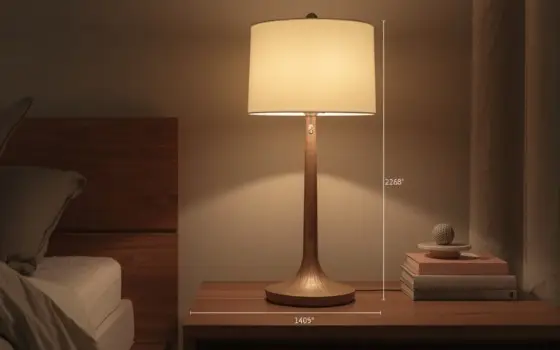
To make it easy to apply everything above, here’s a practical breakdown by bedroom type:
Small Guest Bedroom (under 150 sq ft)
- Lamp height: 20–24 inches total
- Shade width: 10–13 inches
- Base style: Slim, vertical — candlestick or narrow column
- Shade shape: Empire or small drum
Standard Primary Bedroom (150–250 sq ft)
- Lamp height: 24–27 inches total
- Shade width: 13–16 inches
- Base style: Flexible — urn, column, geometric
- Shade shape: Empire or bell
Large Master Bedroom (250+ sq ft)
- Lamp height: 27–32 inches total
- Shade width: 15–18 inches
- Base style: Substantial — wider urn, statement ceramic, or sculptural base
- Shade shape: Drum or wide empire
FAQs
u003cstrongu003eQ1.Is 28 inches too tall for a nightstand lamp?u003c/strongu003e
A. Not necessarily. If your nightstand is on the shorter side (22–24 inches) and your bed is at a standard height, a 28-inch lamp can work well. The test is always where the shade bottom lands relative to your eye level when sitting up in bed.
u003cstrongu003eQ2.What’s the right lamp size for a floating nightstand shelf?u003c/strongu003e
A. Floating shelves are typically narrow, so go for a lamp with a slim base — no more than 4 inches in diameter — and a shade no wider than the shelf. A total height of 18–22 inches usually works best since floating shelves tend to be mounted higher than floor-standing nightstands.
u003cstrongu003eQ3.Can I use a floor lamp instead of a table lamp on a nightstand?u003c/strongu003e
A. Not on the nightstand itself, but a slim arc or tripod floor lamp positioned beside the bed can absolutely replace a nightstand lamp and often frees up the entire nightstand surface.
u003cstrongu003eQ4.Does lamp color affect perceived size?u003c/strongu003e
A. Yes, noticeably. A u003ca href=u0022https://www.sleepfoundation.org/bedroom-environment/light-and-sleepu0022u003ewhite or lightu003c/au003e-colored lamp visually recedes, making it feel smaller and less imposing. A dark or boldly colored lamp commands more visual weight even at the same physical size. Keep this in mind if your bedroom is already visually busy.
u003cstrongu003eQ5. Should both nightstand lamps be the exact same wattage?u003c/strongu003e
A. Yes, ideally. Mismatched brightness on either side of the bed creates uneven lighting that can feel off. If you’re using different lamp styles, match the bulb wattage (or lumen output) so both sides feel equally lit.
Conclusion
Understanding what size table lamp for nightstand setups truly need comes down to a layered decision — not just one measurement. Start with your nightstand height and bed height, use those to calculate your ideal shade position, then work backward to find the total lamp height that gets you there. From there, match the shade width to your nightstand’s surface, choose a shade shape based on how you actually use the lamp, and pick a bulb that creates the right atmosphere.
The 24-to-27-inch rule is a genuinely useful starting point, but your bedroom is unique. What matters most is the relationship between your lamp, your nightstand, and your bed — and whether the light falls where it should when you’re actually lying there at night.
Get those proportions right and everything else — the style, the finish, the shade fabric — is just a matter of personal taste. And that’s the fun part.