
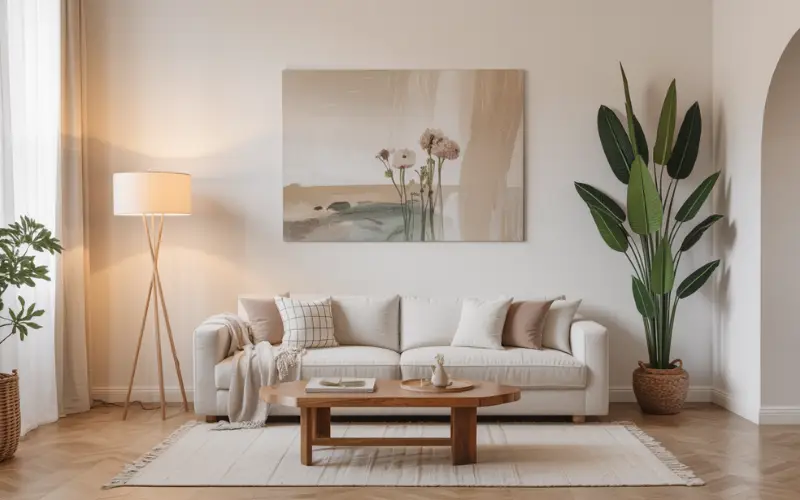
Introduction
You just bought a gorgeous floor lamp. You bring it home, plug it in — and something still feels off. The room looks flat. The light feels wrong. The lamp seems out of place.You are not alone. This happens to almost everyone. The problem is not the lamp itself. The problem is placement.
Knowing where to place a floor lamp in your living room is one of the easiest ways to completely transform how your space looks and feels. A lamp in the right spot creates warmth, depth, and a cozy atmosphere that overhead lighting simply cannot deliver.
In this guide, you will learn the seven best floor lamp positions, what each one achieves, which mistakes to avoid, and how to get the most out of your lamp no matter the size of your room. Let’s get into it.
Table of Contents
1. Why Placement Is Everything

Most people treat floor lamps as an afterthought. They find an empty corner, drop the lamp there, and wonder why the room still does not feel right. Lighting designers know something most homeowners do not: the position of a light source changes the entire mood of a room.
Before you decide where to place a floor lamp in your living room, ask yourself one question: what do I need this lamp to do?
Floor lamps serve three main purposes:
- Task lighting — focused light for reading, crafting, or working
- Ambient lighting — soft overall brightness that fills the room
- Accent lighting — directional light to highlight artwork, decor, or architecture
Your answer to that question will guide every placement decision. Keep it in mind as we walk through the best spots below.
2. The 7 Best Spots for a Floor Lamp in Your Living Room
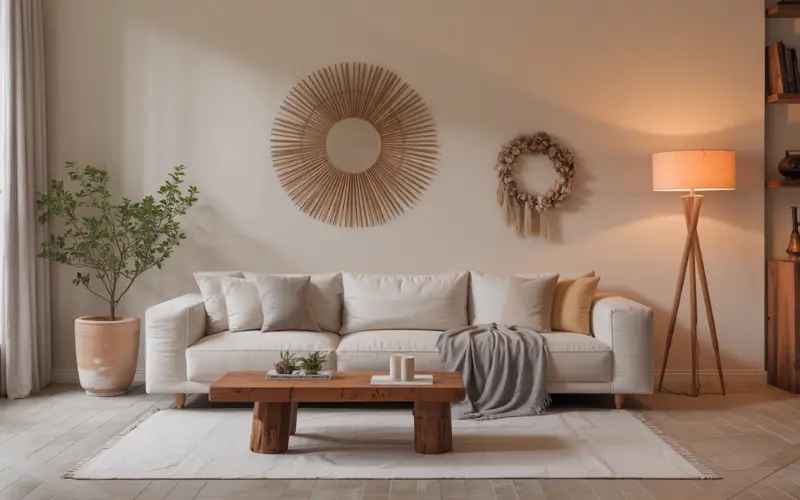
1. Next to Your Reading Chair or Sofa
This is the most popular placement — and for good reason. If you enjoy reading, working, or relaxing with your phone in the evenings, a floor lamp beside your chair or sofa is a complete game changer.
Place the lamp slightly behind and to the side of your seating, not directly above your head. The bottom of the shade should sit near seated eye level so the light falls over your shoulder onto your book or screen. This setup dramatically reduces eye strain during extended reading sessions.
A tall arc floor lamp works especially well beside a sofa. Its curved arm sweeps over the seating area, spreading light evenly without crowding the space next to the couch.
2. In a Dark Corner
Every living room has at least one corner that feels gloomy and ignored. A floor lamp is the fastest fix for this problem.
When you place a lamp in a corner, it bounces light off two walls simultaneously. This creates a soft, diffused glow that makes the entire side of the room brighter and more open. It is one of the easiest ways to make a small living room feel larger.
A torchiere-style lamp — one that directs light upward — works best in corners. It pushes light toward the ceiling and lets it spread naturally across the room. A lamp with a wide fabric shade works equally well, giving the space a warm, inviting glow.
3. Behind the Sofa
If your sofa sits away from the wall, the gap between the back of the couch and the wall is a brilliant spot for a slender floor lamp. This creates a beautiful backlit effect that adds depth and dimension to the whole seating area.
This position is ideal for ambient and mood lighting. It works especially well during movie nights, evening conversations, or any time you want soft, atmospheric light without switching on overhead fixtures.
Make sure the cord is tucked safely along the baseboard. A slim lamp with a stable base is the best choice for this spot so it does not get knocked over during everyday movement.
4. Beside the Television
This placement surprises many people, but if you are figuring out where to place a floor lamp in your living room, the area near your TV deserves serious consideration.
Watching television in a dark room creates harsh contrast between the bright screen and the surrounding darkness. This causes eye fatigue fast. A floor lamp placed beside or slightly behind your TV creates what designers call bias lighting — a soft glow that reduces that contrast and makes long viewing sessions far more comfortable.
Use a lamp with a warm color temperature, around 2700K to 3000K, for this spot. Position it to the side rather than directly behind the screen to avoid unwanted reflections.
5. Flanking the Fireplace
If your living room has a fireplace, it is already the natural focal point of the space. A pair of matching floor lamps placed on either side frames the fireplace beautifully and adds visual symmetry to the room.
This classic arrangement works well in traditional, farmhouse, and transitional interior styles. For modern or eclectic rooms, a single lamp placed asymmetrically to one side can look equally striking and intentional.
Choose lamps with warm-toned shades in this spot to complement the natural warmth a fireplace brings. Brass, bronze, or matte black bases all pair beautifully with most fireplace surrounds.
6. Near Artwork or a Gallery Wall
Want to show off a painting or a curated gallery wall? A floor lamp with an adjustable head or a spotlight-style shade can act as a dedicated accent light for your art.
Position the lamp at an angle that directs light toward the artwork without creating glare on the surface. The goal is to illuminate the piece naturally, not wash it out. This technique gives your living room a polished, gallery-quality feel and draws immediate attention to the art you love.
7. Beside a Bookshelf
A floor lamp placed next to a bookshelf serves double duty. It provides focused light for browsing titles and reading, and it creates a warm, layered atmosphere that bookshelves naturally invite.
Choose a slim, narrow-base lamp so it does not crowd the shelf space. This spot pairs well with a small reading chair nearby, creating a cozy reading nook that feels intentional and complete.
3. Common Mistakes to Avoid
Understanding where to place a floor lamp in your living room also means knowing what not to do. These are the most common placement mistakes homeowners make:
- Placing the lamp in the middle of a walkway — this is both a safety hazard and visually awkward
- Positioning the lamp directly behind someone’s head at seated height — this creates uncomfortable glare
- Placing the lamp too close to curtains or drapes — fabric near a warm bulb is a fire risk
- Putting the lamp in front of a window — it blocks natural light during the day and looks odd at night
- Isolating the lamp far from any furniture — it will look random and disconnected from the room
- Using a lamp that is the wrong scale — a tiny lamp in a large room looks lost; an oversized lamp overwhelms a small space
4. One Lamp or Three? Here’s How Many Your Living Room Actually Needs
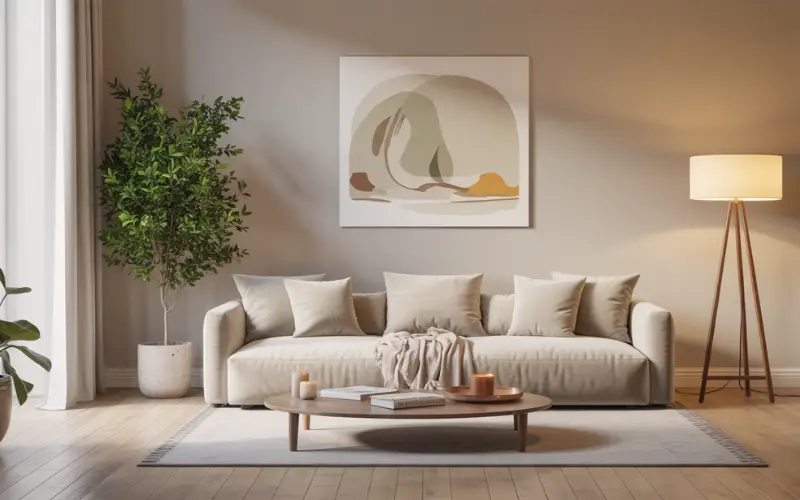
Lighting designers recommend having at least three light sources in any well-designed room, not counting natural daylight from windows. Your three sources typically include:
- One overhead or ceiling light for general brightness
- One floor lamp for task or ambient lighting
- One table lamp or accent light for warmth and depth
For larger living rooms or open-plan spaces, two floor lamps placed at opposite ends of the room help balance the lighting and define separate zones — a reading area on one side, a TV area on the other.
5. Pro Tips for Getting the Most Out of Your Floor Lamp
Choose the Right Bulb Color Temperature
Warm white bulbs between 2700K and 3000K create a cozy, relaxing atmosphere perfect for living rooms. Cool white bulbs between 4000K and 5000K are better suited to reading and focused tasks. For most living room placements, warm white is the right call.
Use a Dimmable Lamp
A dimmable floor lamp gives you complete control over the mood of your room. Bright light during the day for reading, a soft low glow in the evenings for relaxing. This single feature makes an enormous difference in how your living room feels at different times.
Get the Height Right
Lamp height matters more than most people realize. As a general rule when deciding where to place a floor lamp in your living room, look for lamps between 58 and 64 inches tall for standard ceiling heights. For rooms with ceilings above 9 feet, go taller to keep the proportions balanced.
Manage Your Cords
A beautiful lamp placement ruined by a cord running across the floor is a common and frustrating problem. Always position your floor lamp near a wall outlet where the cord can run discreetly along the baseboard. Cord covers are inexpensive, easy to install, and make the whole setup look clean and intentional.
FAQs
u003cstrongu003eQ1. Where to place a floor lamp in your living room for reading?u003c/strongu003e
A. The best position for reading is beside your chair or sofa, slightly behind and to the side. The bottom of the shade should sit at roughly seated eye level so light falls over your shoulder. An arc lamp that extends over the seating area is an excellent choice if space is tight beside the chair.
u003cstrongu003eQ2. Can I put a floor lamp in the corner of my living room?u003c/strongu003e
A. Absolutely — corners are actually one of the best spots. A lamp in the corner bounces light off two walls at once, creating soft, even illumination that makes the whole room feel brighter and more spacious.
u003cstrongu003eQ3. How close should a floor lamp be to the sofa?u003c/strongu003e
A. Place the base about 18 to 24 inches from the side of your sofa. This gives enough distance to avoid it being bumped while keeping the light close enough to be effective for reading and relaxing.
u003cstrongu003eQ4. Is one floor lamp enough for a living room?u003c/strongu003e
A. For a small living room, one well-placed floor lamp combined with an overhead light is usually enough. For larger rooms, two floor lamps positioned at opposite ends will give you better coverage and a more balanced, layered lighting effect.
u003cstrongu003eQ5. Where should you NOT place a floor lamp?u003c/strongu003e
A. Avoid placing a floor lamp in the middle of a walkway, directly in front of a window, or too close to curtains and drapes. These positions create safety issues, block natural light, or create an unbalanced look in the room.
Conclusion
Finding the perfect spot for your lamp does not have to be complicated. Once you understand the basics of lighting layers and room flow, knowing where to place a floor lamp in your living room becomes second nature.Whether you tuck it into a dark corner to brighten the room, position it beside your favorite reading chair for focused light, or arc it gracefully over your sofa for a cozy evening glow — every placement decision you make adds personality and comfort to your space.
The best living rooms are never lit by a single overhead light. They are layered, warm, and thoughtfully arranged. A well-placed floor lamp is one of the simplest and most affordable ways to achieve that look without hiring an interior designer.
So go ahead — try one of the seven spots from this guide, experiment with what feels right for your room, and watch how quickly the whole space transforms.
And if you are still unsure about where to place a floor lamp in your living room, start with the reading chair position. It works in almost every room, every style, and every budget. You can always move it from there.